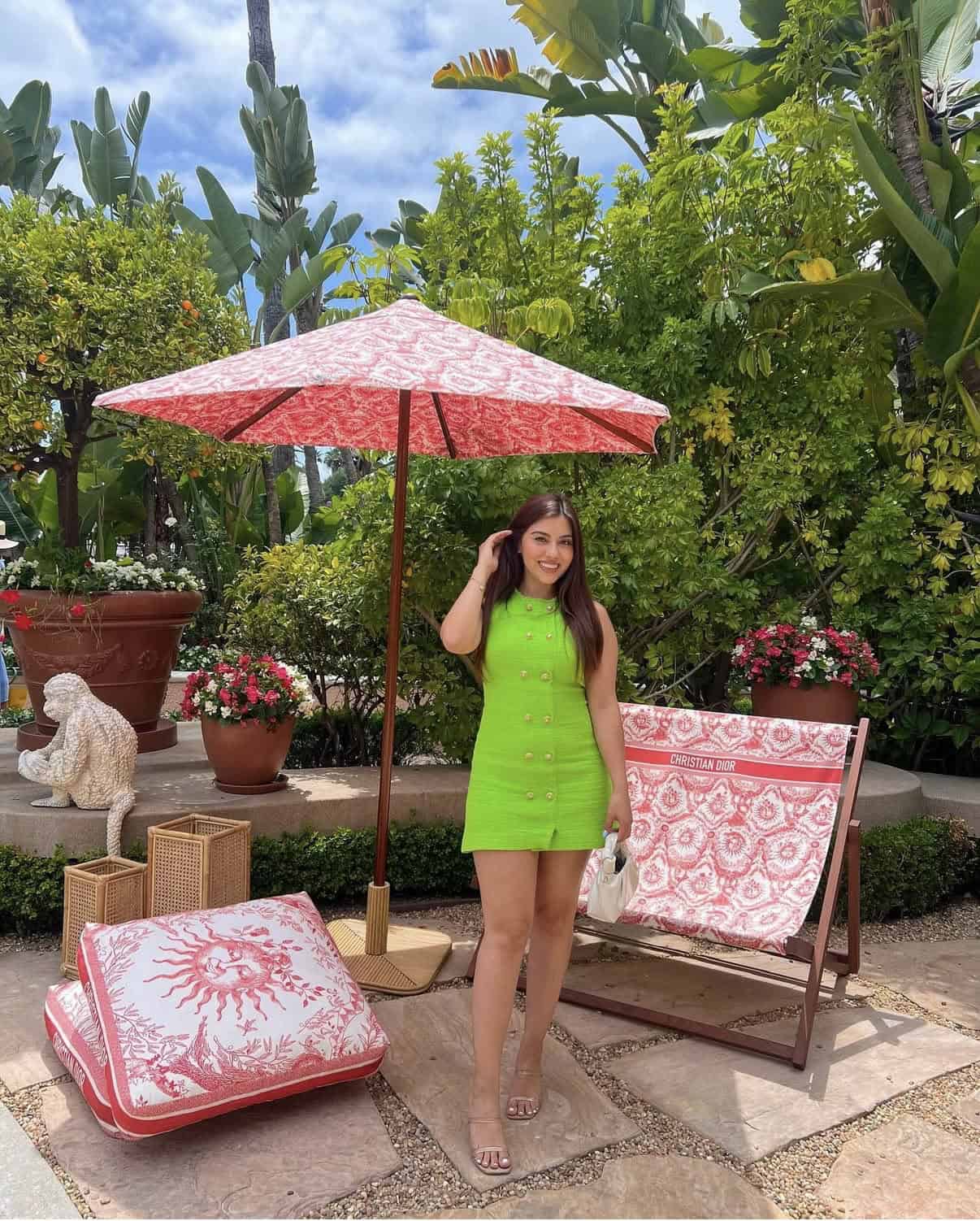
Zara vs H&M: Which One Is Actually Worth It?
>
Published: March 9, 2026 | Last Updated: March 12, 2026
Zara vs H&M is one of the most common fast fashion debates: Zara is a Spanish high-street brand known for runway-inspired styles and higher price points, while H&M is a Swedish retailer focused on affordable basics and broad size availability for everyday shoppers.
If you want to know which store wins overall: Zara is better for trend-forward, investment-worthy pieces that look more expensive than they are. H&M is better when you need budget-friendly basics, need plus sizes, or are shopping for one-time-wear items. Most women will get the best value by shopping both stores with intention rather than being loyal to just one.
I have been shopping both stores for years. Living in Los Angeles, I have easy access to multiple locations of each, and I have been doing back-to-back comparisons since summer 2024. I walked into both stores in January 2026 and bought the same categories of items from each. I wore everything, washed everything, and took notes. This is what I found.
How I Tested Them
For this comparison, I visited the Zara at The Grove in Los Angeles and the H&M at the Century City Mall in January 2026. I bought five comparable categories at each store: a blazer, a pair of wide-leg trousers, a ribbed knit top, a pair of loafers or flats, and a basic tee. I paid for everything myself. No gifted items, no brand deals.
I wore each piece for a minimum of three full days. I machine washed each item twice on a cold, gentle cycle and air-dried them the way I normally would. Then I checked the seams, the fabric, the color retention, and how well each piece held its shape. I also compared both brands’ apps, their return processes, and their online shopping experience. Everything you read here is based on that direct, hands-on testing.
How Do Zara and H&M Compare on Price?
Zara is not cheap fast fashion. It sits in a middle tier – more expensive than H&M but cheaper than brands like Mango or &OtherStories. H&M is genuinely budget-friendly and regularly discounts items even further through sales and its loyalty app.
Here is a rough breakdown based on what I paid in January 2026:
- Basic tee: Zara ~$22 / H&M ~$10
- Ribbed knit top: Zara ~$35 / H&M ~$20
- Wide-leg trousers: Zara ~$60 / H&M ~$35
- Blazer: Zara ~$90 / H&M ~$55
- Loafers or flats: Zara ~$70 / H&M ~$40
On average, Zara runs about 40 to 60 percent higher in price than H&M for the same categories. That said, price alone does not tell the whole story. If a $60 Zara blazer lasts you two years and a $55 H&M blazer fades and loses shape after six months, the Zara piece is actually the better value. More on that in the quality section.
Verdict on price: H&M wins if you are on a tight budget. Zara wins if you are thinking about cost per wear.
Which Brand Has Better Quality?
This is where I want to be really honest with you, because both brands have a reputation that does not always match reality.
After washing and wearing pieces from both brands in January and February 2026, here is what I found:
Zara: The quality is inconsistent but often leans better. The wide-leg trousers I bought had clean seams, a fabric with actual weight to it, and they kept their shape beautifully after two washes. The blazer felt structured and looked genuinely expensive. However, the basic tee I bought from Zara pilled after one wash. Zara is very hit-or-miss depending on the specific item. Outerwear and structured pieces are where Zara really delivers. Jersey basics? Not so much.
H&M: The quality is more predictable – it is consistently okay. Not great, not terrible. The ribbed knit top I bought from H&M held up fine, but the blazer developed a slight pill near the elbows after two washes, and the trousers lost a bit of their structure. H&M’s basics like tees and leggings are actually decent for the price point. Their structured pieces are where the quality gap shows.
A January 2026 data analysis by Outfint found something surprising: when comparing fabric composition on best-selling items, H&M’s best sellers actually had a higher presence of natural fibers than Zara’s in several categories. This does not mean H&M is higher quality overall – Zara still wins on construction and silhouette – but it is a good reminder to always check fabric labels before you buy.
Verdict on quality: Zara wins for structured pieces, blazers, coats, and trousers. H&M holds its own for basics and knits at a fraction of the price.
Which Brand Is More Stylish?
Style is personal, but trend awareness is something you can actually measure. Zara is significantly more fashion-forward than H&M. Zara can move a design from runway to store shelf in about 2 to 3 weeks. That is not an exaggeration – they are genuinely that fast. If you see something on a runway or on a major influencer in early February, there is a good chance a Zara version exists by late February.
H&M moves slower on trends. Their aesthetic leans more toward approachable and wearable rather than editorial. Think classic silhouettes, reliable color palettes, and pieces that look good but do not necessarily make anyone stop and ask where you got it.
That said, H&M’s designer collaborations are legendary. Their past collabs with Balmain, Giambattista Valli, and Mugler made high fashion accessible to women who would never otherwise spend $1,000 on a dress. Keep an eye on their collaboration calendar if statement pieces are your goal.
For women 18 to 35 who want to look put-together without looking like everyone else at the office, Zara tends to deliver that more effortlessly. H&M is great for building a clean, wearable wardrobe that does not demand a lot of effort to style.
Verdict on style: Zara wins for trend-forward, editorial looks. H&M wins for easy, versatile wearability.
What About Sizing and Fit?
This is something most Zara vs H&M comparisons gloss over, and it is incredibly important for women who shop these brands.
Zara sizing: Zara sizes run small and lean toward a more streamlined, European silhouette. If you have curves – wider hips, a fuller bust, or a shorter torso – Zara fits can be genuinely frustrating. Their size range typically goes up to XL or a US 14 in most categories, but the actual fit of those larger sizes is not always flattering. If you are shopping Zara, size up at least one size from your usual. Their TRF line (Trafaluc) and the Studio line sometimes cut differently, so it is worth checking each line individually.
H&M sizing: H&M is far more inclusive. They carry plus sizes up to a 4X in many categories and have a dedicated H&M+ section. The fits also tend to be more generous and forgiving for different body types. Their sizing can be inconsistent across different product lines, but overall, more women can find something that fits well at H&M than at Zara.
This is a genuine gap between the two brands, and it is one I feel strongly about mentioning. If inclusivity in sizing is a priority for you, H&M is the clear winner.
Verdict on sizing: H&M wins by a wide margin for size inclusivity. Zara wins for women who fit into a European silhouette and prefer a more tailored look.
Which Brand Is More Sustainable?
Let me be direct: neither Zara nor H&M is a sustainable brand. Both are fast fashion companies that produce massive amounts of clothing, much of which ends up in landfills. But both have made sustainability efforts worth knowing about.
Zara’s Join Life: Zara’s eco line uses organic cotton, recycled wool, and sustainably sourced materials for select pieces. They have also committed to using 100 percent sustainable cotton and recycled polyester in all products by 2025, though third-party audits on how well they are meeting that goal have been mixed.
H&M Conscious: H&M’s Conscious collection uses recycled and organic materials. They also have an in-store garment recycling program where you can bring old clothes (from any brand) and receive a discount on your next purchase. This is a genuinely practical sustainability initiative that I have used myself.
According to the Good On You sustainability database, both brands score in the “not good enough” range when assessed on environment, labor, and animal welfare. If sustainability is a top priority for you, neither brand will fully satisfy that. But between the two, H&M’s recycling program offers a real, tangible action you can take right now.
Verdict on sustainability: Neither brand is truly sustainable. H&M’s recycling program gives them a slight edge for actionable eco-conscious shopping.
In-Store vs Online: The Shopping Experience
The shopping experience at these two brands is very different, and it matters more than people realize.
Zara in-store: Zara stores are designed to feel like high-end boutiques. Clean, minimal, and slightly intimidating. The layout can be confusing – especially in larger locations like The Grove in LA – and items sell out fast because Zara intentionally keeps inventory low to create urgency. If you see something you love in-store, do not walk away thinking you will grab it online later. It may be gone.
H&M in-store: H&M stores are busier, louder, and more cluttered. The sheer volume of product can feel overwhelming. But that also means there is almost always something in your size. Sales racks are genuinely good at H&M – I found a $50 blazer for $14 in the sale section at the Hollywood & Highland location in December 2025.
Zara online and app: Zara’s app is clean and easy to use. Product photography is excellent, which helps you gauge fit and fabric. Shipping is fast, and the AR try-on feature (available in select markets) is a nice bonus. However, their online inventory also moves fast, so items frequently show as out of stock within days of dropping.
H&M online and app: H&M’s app has improved significantly as of late 2024. The Member Price feature in their loyalty program gives you automatic discounts, and their “pick up in store” option is reliable. Search and filtering are a little clunky compared to Zara, but the size availability online is much better.
Verdict on shopping experience: Zara wins for aesthetics and online product presentation. H&M wins for in-store availability, sale finds, and loyalty program value.
What Are Their Return Policies?
Knowing the return policy before you buy is something most people skip until they need it. Here is the current policy as of early 2026:
Zara: Returns are free if you drop off in-store or use one of their designated drop points. If you request a home pickup return, there is a $3.95 fee deducted from your refund. You have 30 days from the purchase date to return online orders and in-store purchases. Items must be unworn, unwashed, and have all original tags attached. Sale items are also returnable within this window, which is a plus.
H&M: H&M Members (their free loyalty program) get free returns for online orders. Non-members pay a return shipping fee. In-store returns are free for everyone. The return window is 30 days as well, and sale items can also be returned. One thing to note: H&M has gotten stricter about returns in 2024 and 2025, and items showing excessive wear will often be refused.
Verdict on returns: Both brands offer similar policies. H&M’s free membership makes online returns essentially free for regular shoppers.
What Are the Best Things to Buy at Each Store?
After testing both stores thoroughly, here is my honest “buy this here, not there” guide:
Buy at Zara:
- Blazers and structured jackets – Zara’s Tailored Blazer and Double Breasted Blazer lines are genuinely good for the price
- Wide-leg and tailored trousers – cuts are sharp and the fabric has real weight
- Leather and faux-leather pieces – Zara’s faux leather trousers and skirts look far more expensive than they are
- Outerwear – coats from Zara tend to hold up well through a full season
- Shoes – Zara’s loafer styles in particular have gotten great reviews for longevity (just size up half a size)
Buy at H&M:
- Basic tees and long-sleeve tops – the H&M Favorites line is surprisingly soft and holds color well
- Everyday leggings and casual knits – good quality for the price, especially in the Move collection
- Event or one-time-wear pieces – when you need a dress for a bridal shower you will wear once, H&M prices make the most sense
- Swim and loungewear – H&M’s swimwear is one of the best value options in this price range
- Sale rack finds – seriously, always check the sale rack at H&M before you pay full price anywhere else
Mistakes to Avoid at Both Stores
These are the things I see women get burned by again and again at both Zara and H&M. Learn from them before you spend the money.
Mistakes at Zara:
- Not sizing up. Zara consistently runs small. If you are between sizes, always go up. Trying to squeeze into a smaller size will only lead to a return or a piece you never actually wear.
- Buying basics at Zara’s prices. Their basic tees and simple jersey pieces are overpriced for the quality. Save Zara’s budget for structured, design-forward items where the quality gap actually shows.
- Waiting to buy something you love. Zara keeps intentionally low inventory. If you love something, buy it. It will likely be gone within a week, sometimes within days.
- Trusting the product photos for shoes. Zara shoe photography is gorgeous but sometimes misleading. Read the reviews carefully before buying shoes online – comfort and sizing issues come up frequently.
Mistakes at H&M:
- Buying structured pieces and expecting them to last. H&M blazers and trousers are fine for occasional wear, but if you plan to wear something twice a week, the quality will not hold up long-term. Be realistic about wear frequency when you shop here.
- Skipping the H&M Membership. Their free membership gives you member prices, free returns, and early access to sales. There is no reason not to sign up.
- Ignoring the sale section. H&M’s sale section, both in-store and online, is genuinely good. Always check it first.
- Assuming the Conscious collection is fully sustainable. The H&M Conscious label indicates the use of some sustainable materials, but it does not mean the entire product is eco-friendly. Read the label details if sustainability matters to you.
Full Side-by-Side Comparison
Here is a breakdown of both brands across all major categories:
Zara
- Parent Company: Inditex Group (Spain, founded 1975)
- Price Range: $20 – $150+ for women’s clothing
- Best For: Trend-forward women who want high-street style with a luxury feel
- Size Range: XS – XL (US 00 – 14); limited plus-size options
- Trend Speed: Runway to shelf in 2 – 3 weeks; drops new styles multiple times per week
- Top Categories to Buy: Blazers, tailored trousers, coats, faux-leather pieces, shoes
- Sustainability: Join Life eco line; committed to sustainable materials by 2025 (progress mixed)
- Return Policy: 30 days; free in-store returns; $3.95 home pickup return fee
- Pros: Fashion-forward designs, structured quality on key pieces, looks more expensive than it is
- Cons: Runs small, limited size inclusivity, inconsistent quality across product lines, pricier
H&M
- Parent Company: H&M Group (Sweden, founded 1947)
- Price Range: $8 – $80 for women’s clothing
- Best For: Budget-conscious shoppers, plus-size women, and wardrobe basics
- Size Range: XS – 4X; dedicated H&M+ plus-size section
- Trend Speed: Slower than Zara; more classic and accessible silhouettes
- Top Categories to Buy: Basic tees, knitwear, loungewear, swimwear, sale rack finds
- Sustainability: Conscious collection; in-store garment recycling program for any brand
- Return Policy: 30 days; free in-store returns; free online returns for members
- Pros: Affordable, size-inclusive, great sale rack, reliable loyalty program
- Cons: Quality on structured pieces is inconsistent, less trend-forward, stores can feel cluttered
So Who Wins – Zara or H&M?
Neither brand wins outright – and honestly, the smartest approach is to use both stores strategically rather than picking a side.
Here is the formula I personally use and recommend:
- Spend at Zara for pieces you will wear repeatedly and want to look elevated – blazers, tailored trousers, outerwear, and shoes.
- Spend at H&M for basics, one-time-occasion pieces, swimwear, and anything you want at a lower price point without sacrificing too much quality.
- Always check the sale sections at both before paying full price. Both brands have great deals if you are patient.
- If size inclusivity matters to you, lean toward H&M as your primary store and supplement with Zara pieces in categories where their sizing works for you.
Frequently Asked Questions About Zara vs H&M
Is Zara better quality than H&M?
Zara generally has better quality on structured pieces like blazers, coats, and trousers. H&M holds its own on basics and knitwear for the price. The key difference is that Zara’s quality gap is most visible in items where construction and fabric weight matter most.
Is Zara more expensive than H&M?
Yes, Zara is consistently 40 to 60 percent more expensive than H&M across comparable categories. A blazer that costs $55 at H&M will typically run $90 to $100 at Zara. Whether the price difference is worth it depends on the specific item and how often you plan to wear it.
Which brand is better for plus-size women?
H&M is significantly better for plus-size women. They carry sizes up to 4X and have a dedicated H&M+ section both online and in many stores. Zara’s size range tops out at XL or a US 14 in most lines, with limited plus-size offerings overall.
Which brand follows trends faster?
Zara follows trends significantly faster than H&M. Zara can go from runway inspiration to store shelves in about 2 to 3 weeks. H&M moves more slowly and tends to offer more classic, approachable versions of trends rather than immediate runway replicas.
Does Zara or H&M have better sales?
H&M tends to have better, more frequent sales. Their Member Price system gives loyalty members automatic discounts, and their in-store sale racks are regularly stocked with deeply discounted items. Zara does seasonal sales but keeps promotions less frequent to protect its premium positioning.
Which brand is better for work outfits?
Zara is generally better for office and work outfits. Their tailored blazers, structured trousers, and minimalist blouses translate well to a professional setting and look more polished than H&M’s equivalent pieces. That said, H&M is a great place to buy work basics like plain-colored blouses and simple trousers at a lower cost.
How does sizing work at Zara vs H&M?
Both brands run small compared to standard US sizing. At Zara, size up at least one size from your usual US size – their cuts lean toward a slim European fit. H&M sizing is also small but slightly more generous than Zara. Always check the specific size chart for each item online before buying.
Which brand is better for going out outfits?
Zara edges ahead for going out and event outfits. Their dresses, satin pieces, and fashion-forward styles tend to look more polished and elevated. H&M is a solid option for one-time event pieces where you do not want to spend a lot because you know you will only wear it once.
Which brand is more sustainable?
Neither brand is truly sustainable – both are fast fashion companies with significant environmental footprints. Between the two, H&M’s in-store garment recycling program offers a practical, actionable step for eco-conscious shoppers. Both brands have sustainable sub-lines (Zara Join Life and H&M Conscious) but third-party assessments rate both brands as needing significant improvement.
Which brand has better shoes?
Zara has noticeably better quality shoes. Their loafer styles in particular have held up well through real wear testing in early 2026. H&M shoes tend to feel cheaper and show wear faster, though they are fine for very occasional wear at a lower price point.
Is it worth buying a Zara blazer?
Yes – a Zara blazer is one of the best value purchases you can make at a fast fashion price point. Their tailored blazers are well-constructed, hold their shape after washing, and look significantly more expensive than they are. Just make sure to size up and check the fabric label before buying.
Should I buy from both Zara and H&M?
Yes – the smartest approach is to use both strategically. Shop Zara for pieces where design and construction matter most, like outerwear, blazers, and occasion wear. Shop H&M for basics, sale finds, and items you only need for one or two wears. Combining both gives you a well-rounded wardrobe without overspending.
The Bigger Picture: How You Shop Matters as Much as Where You Shop
Here is something I have learned shopping these stores for years in LA: the women who consistently look the most put-together are not the ones who spend the most. They are the ones who know exactly what they are buying, where to spend and where to save, and how to build a wardrobe that actually reflects who they are.
Zara and H&M are tools. Neither one defines your style – you do. When you walk into either store with a clear sense of what you need, what flatters your body, and how much you are willing to spend, you stop being swayed by a pretty mannequin or a flash sale. You start shopping with intention. That shift – from impulse buying to intentional buying – is where real style confidence comes from.
It is not about wearing Zara or wearing H&M. It is about wearing what makes you feel like yourself. And knowing enough to make that choice on purpose.
If this helped you figure out where to spend your money, you might also enjoy my post on how to build a capsule wardrobe on a budget, where I break down exactly how to combine fast fashion pieces with longer-lasting staples for a wardrobe that works harder for you every single day.
Jasmine Del Toro | LA Lifestyle Blogger
I’m Jasmine Del Toro, a Los Angeles-based lifestyle blogger who tests beauty products, wellness trends, and everyday solutions in real life. I have been shopping Zara and H&M across multiple LA locations since 2019 and conducted back-to-back wear and wash tests on both brands in January and February 2026 to bring you this comparison. I share what actually works, what doesn’t, and what you need to know before spending your money. My approach is practical, honest, and based on personal experience living in LA.





Post Comment